

New commentary urges action by the International Maritime Organization to prevent plastic pollution at sea
Following several large-scale spills, an international group of experts is calling for IMO to recognize the hazards that plastic pellets (‘nurdles’) pose to the marine environment and to implement improved prevention and mitigation measures, warning that current rules fail to protect the marine environment from these pollutants.
The new scientific commentary, accepted for publication in Cambridge Prisms: Plastics, brings together researchers who have studied plastic pellets for years, and in some cases decades, across the globe. Their work includes field sampling, laboratory analyses of chemicals and toxicity, wildlife exposure studies, and investigations of large-scale pellet spill events.
Pellets are small, lentil-sized (2-5 mm) plastic particles created from virgin or recycled plastic and then used to produce a wide range of plastic materials. Pellets are often spilled during storage and handling on land and sea, and ocean spills during transport have been documented since the early 1970s.
“Today the volumes of plastic pellets entering the marine environment are enough to ‘feed’ millions of young seabirds” notes Dr. Jennifer Lavers, who studies pollutants in seabirds. “In some areas we are already seeing a nearly 100% rate of plastic ingestion, with pellets being particularly problematic for some species. When birds and other wildlife eat these plastics, it can block their digestive system and lead to a wide range of serious health conditions.”
Once in the environment, the pellets pose both physical harm, through ingestion and blockage, and chemical harm as they contain, absorb and desorb toxic persistent substances that can be transported across oceans and into food webs.
“Plastic pellets are not inert,” says Dr. Sinja Rist, co-author from DTU Aqua who works with pelagic pollutants. “Pellets are persistent, widely dispersed, readily ingested by wildlife, and capable of transporting hazardous chemicals, posing a threat to a wide range of marine organisms.”
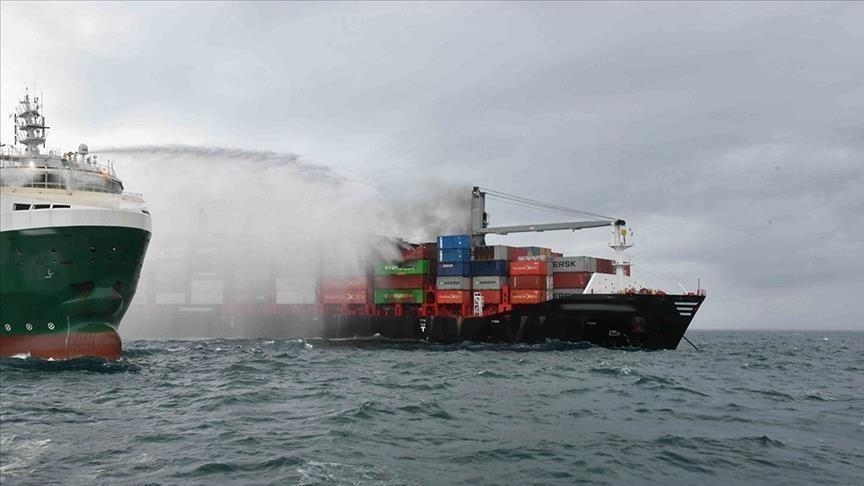
While pellet spills from ocean-going container ships have been common for decades, a spill in 2021 demonstrated some of the significant threats posed by shipping disasters. That year, the X-Press Pearl container ship caught fire off the coast of Sri Lanka, spilling its cargo of chemicals and pellets and causing an estimated $6.4 billion in damages, much of this linked with environmental contamination from burned and spilled plastic pellets. The incident brought new attention to the urgent need to address the ongoing threats from ocean releases of pellets.
“After studying the aftermath of the X-Press Pearl disaster, it is impossible to argue that plastic pellets are harmless cargo,” said Hemantha Withanage, Chairperson, Centre for Environmental Justice in Sri Lanka. “The impacts in Sri Lanka were immediate, widespread, and long-lasting. Stronger international regulation is essential to prevent this from happening again.”
Under current rules of the International Convention for the Prevention of Pollution from Ships (MARPOL), the intentional release of plastics is banned, but rules to address spills and accidents are inadequate. The European Union has recently adopted rules to prevent pellet losses across the full supply chain and in 2021, the IMO committed to addressing pellet pollution from shipping as part of its broader commitment to reducing marine plastic litter.
Since 2021, several proposals have been discussed for addressing pellet spills, including assigning pellets to a specific UN number, which would recognize their environmental hazard potential and trigger measures related to packaging, labelling, and notification. The commentary notes that scientific evidence clearly shows that plastic pellets pose hazards to the marine environment and the scientific team calls for the IMO to recognize these hazards, and to implement improved prevention and mitigation measures.
“There are decades of studies highlighting threats from plastic pellets released into the oceans, including threats to marine animals and the food chain,” said Dr. Therese Karlsson, lead author of the study and a Science Advisor for IPEN. “Plastics are made with thousands of chemicals, including many known to cause harm to the environment and our health. It is past time for global regulations to protect the oceans from spills of hazardous plastic pellets.”
Read the commentary, “Decades of Scientific Research Show that Plastic Pellets Pose Hazards to the Environment.”
 English
  简体中文
简体中文  Français
  Bahasa Indonesia
  Русский
  Español
  العربية
  Shqip
Shqip  Հայերեն
  Azərbaycan dili
  Беларуская мова
  Български
  Cantonese
  Hrvatski
  Čeština
  ქართული
  Deutsch
  Ελληνικά
  हिन्दी
  Қазақ тілі
  한국어
한국어  Кыргызча
  Bahasa Melayu
  नेपाली
  Português do Brasil
  Kiswahili
  Svenska
  Tagalog
  தமிழ்
தமிழ்  ไทย
ไทย  Українська
  Tiếng Việt