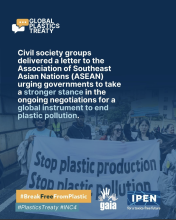
CSOs urge ASEAN leaders to take a strong stance in the ongoing negotiations to develop an international legally binding instrument to address plastic pollution, including in the marine environment.
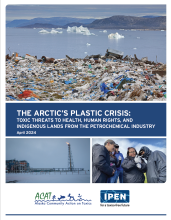
A new report from Alaska Community Action on Toxics and IPEN finds that chemicals, plastics, and climate change are interrelated and threaten Arctic Peoples and lands. These forces have combined to poison lands, waters, and traditional foods of Arctic Indigenous Peoples, with ongoing health effects that threaten their cultures and communities.
This report presents new data on the total lead content of solvent-based paints available on the market in Colombia. It also presents background information on why the use of lead paint is a source of serious concern, especially to children’s health; a review of national policy frameworks that are in place to ban or restrict the manufacture, import, eXport, sale and use of lead paint, and provides a strong justification to adopt and enforce further regulatory controls in Colombia.
The Federal Democratic Republic of Nepal is a landlocked sovereign state located in Asia. Nepal has a surface area of 147,181.48 km2, lies within the latitude 26º 22‵N to 30º 27‵ N and longitude 80º 04‵E to 88º 12‵E in South Asia. The Himalayan country borders China to the north and India to the south, east, and west. The average east-to-west length of the country is 885km and the north-to-south width is 193km.