

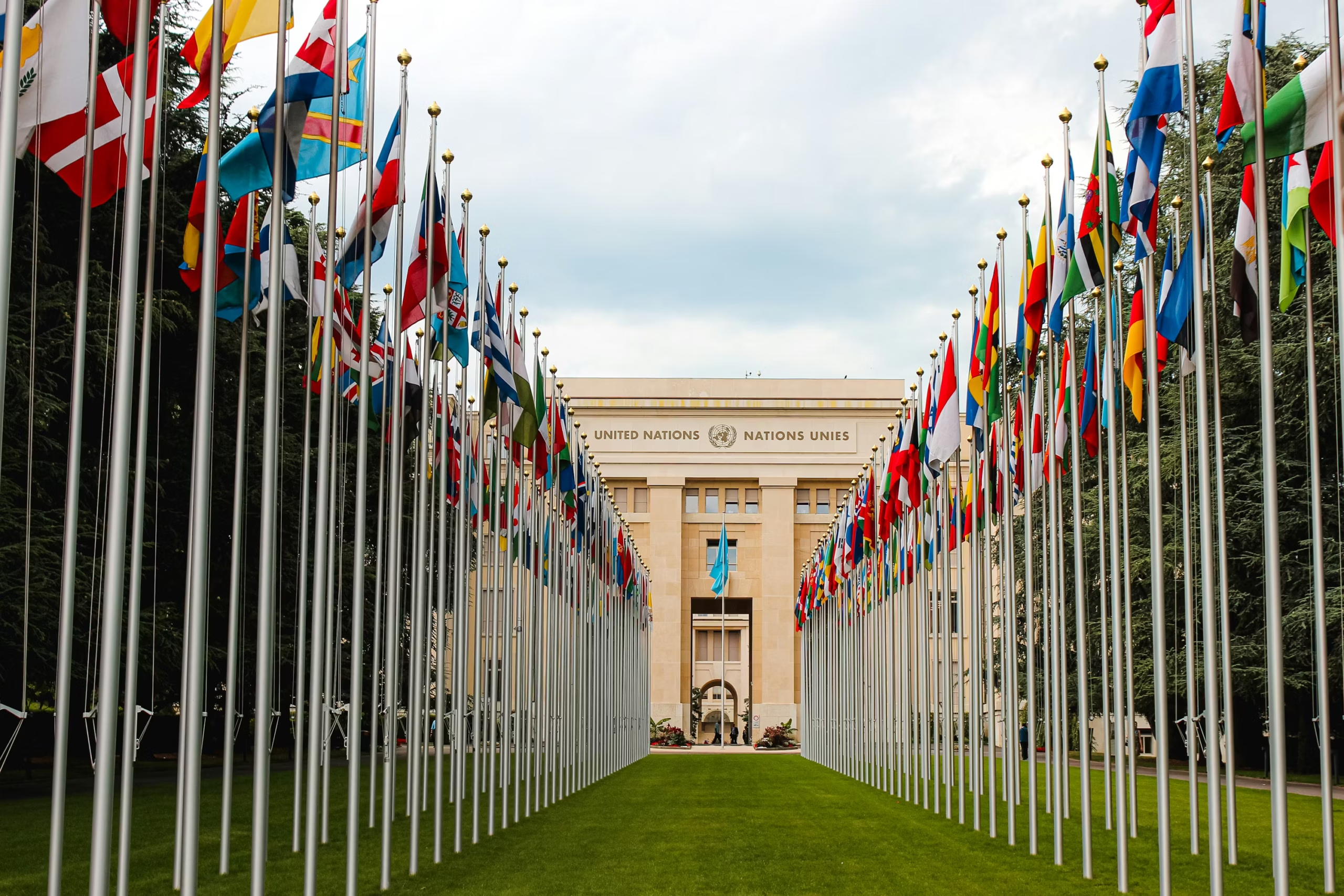
Geneva, 05 February 2026 – Countries from around the world will gather this Saturday for a one-day meeting to elect a new Chair of the Plastics Treaty INC negotiations. To date, the Treaty talks have been strangled by consensus, thwarting democracy and stifling the voices of those from countries most impacted by the plastics crisis. With no clear candidate for the Chair, IPEN calls for voting to be adopted at the outset of the upcoming day-long session, noting that voting was used at a previous Treaty INC.
In addition to electing a new Chair, the INC can avoid an ongoing standstill by taking a vote. Under the current rules, decisions can be made by majority vote. However, negotiators have been weak-willed in failing to move beyond consensus, despite the lack of progress at recent INCs due to obstruction by fossil fuel states. These few oil- and plastic-producing countries have been intent on blocking any global rules to protect human health and the environment from their toxic plastics and the fossil fuels from which they are made.
“In Geneva this Saturday, the INC can avoid the consensus trap, which has been used and abused by a few countries to create roadblocks. The INCs have not been able to make decisions, as oil-exporting countries and industry have dominated the discussions,” said Gohar Khojayan, IPEN Co-chair from Armenia. “Every country understands that there is a legal basis for voting under the INC rules. In August, after the last INC fell apart, it was clear that over 100 countries are ready to drop consensus and use voting to create protections from toxic plastics that the planet and people urgently need.”
There has been confusion about the use of consensus, however, voting was used at INC2 in April 2023. The Plastics Treaty negotiations rules of procedure allow for voting, and voting is used in many other multilateral environmental agreements. IPEN notes that by allowing voting when consensus cannot be reached, the talks avoid succumbing to a small group of countries intent on blocking progress while incentivizing compromises.
“As one government delegate has said, ‘Consensus kills democracy.’ Without voting and accountability, the INC will be held hostage by a few countries that do not want to address escalating overproduction of plastics and toxic plastic chemicals poisoning our food, air, water, and even our bodies,” said Yuyun Ismawati, IPEN Co-chair from Indonesia. “IPEN expects the new Chair will be open, transparent, and inclusive. It will help lead the way to a meaningful global agreement that puts human health and the environment ahead of plastic and fossil fuel industry profits.”
Voting is a norm in other UN agreements, and there is no reason countries should continue to delay adopting democratic processes. IPEN calls for the swift adoption of voting for the new Chair and continued use of voting at the next INC to resolve substantive issues when a few countries are obstructive.
 English
  简体中文
简体中文  Français
  Bahasa Indonesia
  Русский
  Español
  العربية
  Shqip
Shqip  Հայերեն
  Azərbaycan dili
  Беларуская мова
  Български
  Cantonese
  Hrvatski
  Čeština
  ქართული
  Deutsch
  Ελληνικά
  हिन्दी
  Қазақ тілі
  한국어
한국어  Кыргызча
  Bahasa Melayu
  नेपाली
  Português do Brasil
  Kiswahili
  Svenska
  Tagalog
  தமிழ்
தமிழ்  ไทย
ไทย  Українська
  Tiếng Việt