
Spacer


Google Translate

IPEN

A Toxics-Free Future

Donate

Highlights Front Roll

Minamata Convention on Mercury COP-6 | November 3-7, Geneva
International Lead Poisoning Prevention Week 2025
Semia Gharbi Wins Goldman Environmental Prize!
Plastics Treaty INC-5-2
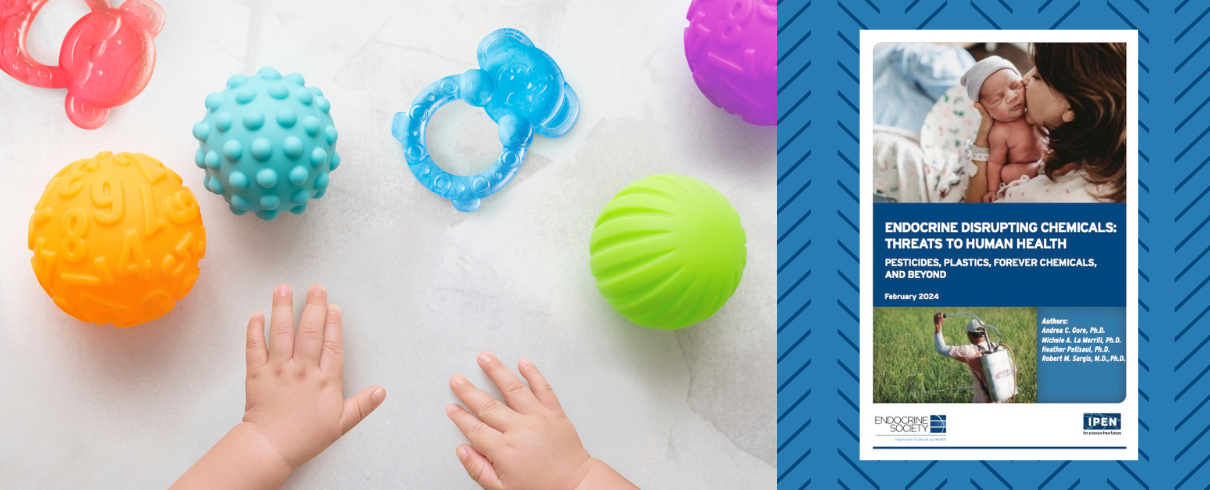
Endocrine Disrupting Chemicals: Threats to Human Health
Chemical Recycling: A Dangerous Deception

See StopPoisonPlastic.org - our website on toxic plastics

(Rome, Italy) A U.N. expert scientific review committee has evaluated two toxic, chemical additives found in many common plastics and has concluded the evidence of the substances harm to health and the environment qualify them for global elimination, recommending that the chemicals be listed under the Stockholm Convention on Persistent Organic Pollutants (POPs).

A new report compiled by Valerie Denney, a long-time communications adviser to IPEN, warns that a plastic waste-burning “bioenergy” facility proposed for the city of Gary, Indiana (about 30 miles south of Chicago on the shore of Lake Michigan) will cause major health and environmental problems.

UN Special Rapporteur urges closing a loophole in Minamata Convention on Mercury to stop human rights abuses linked to mercury in gold mining

Geneva, Switzerland - As many as 15 million men, women and children around the world suffer significant and potentially life-threatening human rights abuses from mercury used in small-scale gold mining, according to a groundbreaking report presented today by Marcos A. Orellana, the UN Special Rapporteur on Toxics and Human Rights.

A delegation of IPEN members are joining the resumed eighteenth session of the African Ministerial Conference on the Environment (AMCEN) in Dakar, Senegal this week, under the theme: “Ensuring the well-being of populations and ensuring environmental sustainability in Africa".

The Strategic Approach to International Chemicals Management (SAICM) was signed in 2006 at the first session of the International Conference on Chemicals Management (ICCM). SAICM is a unique global strategy to create a world where chemicals are no longer produced or used in ways that harm human health and the environment.

IPEN is actively engaged in the August 2022 in-person SAICM IP4 (4th Intersessional Process) meeting in Bucharest, Romania. We have engaged with the SAICM process since the first Preparatory meeting in 2003 and continue to support the contributions of our member organizations around the world to the SAICM Process today. 

Two young kids holding yellow signs reading "Ban Lead Paints"

In an article for Asia Pacific Coatings Journal (APCJ), the leading trade magazine for the coatings industry in Asia, IPEN Senior Adviser Jack Weinberg and Jeiel Guarino, IPEN Lead Paint Elimination Campaigner describe the need for and effects of stricter global rules to end the trade in lead chromates, the pigments used in lead paint.

Lead paints were banned in many wealthy countries decades ago, but they are still widely used in many countries. The WHO says that lead paint continues to be one of the largest sources of domestic exposure to lead in children, and doctors and scientists agree that there is no safe level of lead exposure.

Pages

Subscribe to IPEN RSS